


News
NEWS
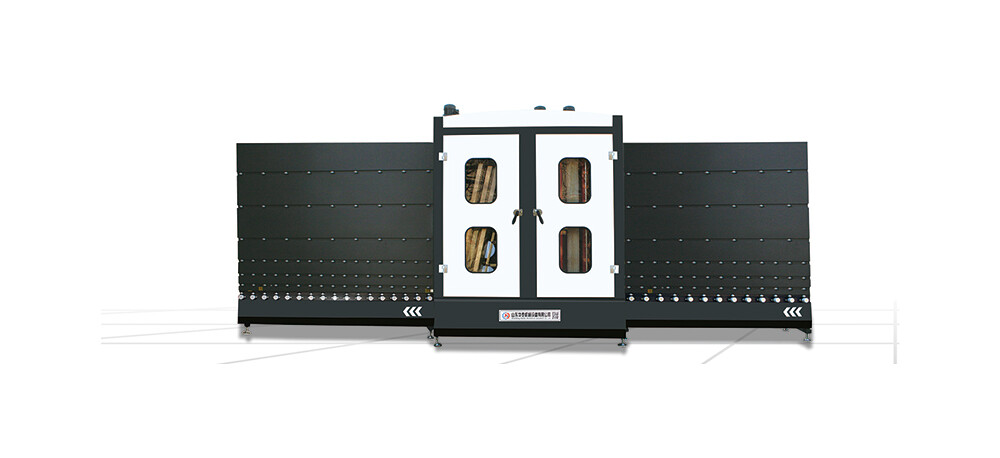
How to deal with the wear of insulating glass production lines? Currently, there is no consistent classification method for the wear of insulating glass production lines. Generally, it can be summarized into two categories: one is the description of the appearance of wear based on the wear effect, such as pitting wear, bonding wear, scratch wear, etc. Another type is classified based on the conflict mechanism into abrasive wear, adhesive wear, fatigue wear, corrosive wear, etc.
In the insulating glass production line, adhesive wear occurs. Under the effect of tangential force, the adsorption film and dirt film on the surface of the friction pair are damaged, causing cold welding at the general peaks of the surface at each point of mutual interaction. Due to relative motion, the material is transported from one surface to another, resulting in adhesive wear. During this process, sometimes the materials may also adhere back to their original surface, showing reverse transportation or detaching from the adhered surface and becoming free particles. The greater the load, the higher the surface temperature, and the more severe the adhesion phenomenon. Severe adhesive wear can cause the moving pair to seize up. Adhesive wear is a widespread type of wear between metal friction pairs.
To reduce adhesive wear, the following methods can be adopted: ① Select matching materials reasonably. Metals of the same kind are more likely to stick together than metals of different kinds. Brittle materials have stronger anti-adhesion ability than plastic materials. Surface treatment (such as surface heat treatment, electroplating, spraying, etc.) can prevent the occurrence of adhesive wear. ② Limit the temperature of the conflicting surface. ⑤ Use lubricants containing oil and extreme pressure additives. ④ Control the pressure.
2. Abrasive wear in the insulating glass production line refers to the phenomenon where free hard particles (such as dust or metal particles formed by wear) or hard general peaks enter from the outside between the abrasive surfaces and plow out many grooves on the surface of relatively soft materials, causing the materials to fall. Abrasive wear is related to the hardness of the material of the friction pair and the hardness of the abrasive particles. Sometimes, choosing cheaper materials and replacing easily worn parts at regular intervals is more in line with economic principles.
3. Fatigue wear in the insulating glass production line: Under the effect of variable contact stress, if the stress exceeds the corresponding contact fatigue limit of the material, fatigue cracks will form on the surface of the friction pair or at a certain depth below the surface. As the cracks expand and connect with each other, metal particles will fall from the working surface of the parts, resulting in pitting damage on the surface. This constitutes fatigue wear or fatigue pitting.
To increase the fatigue life of the surface of parts, in addition to reasonably selecting the contact pair materials, attention should also be paid to: ① Reasonably selecting the surface roughness of the contact surface of the parts. Under normal circumstances, the smaller the surface roughness value, the longer the fatigue life. ② Select the viscosity of the lubricating oil reasonably. Oil with low viscosity is prone to seep into cracks, accelerating their propagation. High-viscosity lubricating oil is conducive to the uniform distribution of contact stress and enhances the ability to resist fatigue wear. Adding extreme pressure additives or solid lubricants to lubricating oil can enhance the anti-fatigue performance of touch surfaces. ③ Select the hardness of the contact surface of the parts reasonably. Take bearing steel as an example. When the hardness is 62HRc, its resistance to fatigue wear is high. Increasing or decreasing the surface hardness will significantly reduce its service life.
4. Corrosion wear refers to the surface damage caused by chemical or electrochemical reactions between metals and surrounding media (such as acids in the air, lubricating oil, etc.) during the corrosion wear conflict process in insulating glass production lines. Among them, oxidation wear is the most common. This is a wear phenomenon where the metal contact pair repeatedly generates and wears off the oxide film on the contact surface when working in an oxidizing medium. In fact, it is a process in which the effects of chemical oxidation and mechanical wear occur successively. The magnitude of oxidative wear depends on the bonding strength of the oxide film and the oxidation rate.
In addition to the above four types of wear on the basic insulating glass production line, there are also some wear phenomena that can be regarded as derivatives or combinations of the basic wear types.
RECENT NEWS
Online Message